
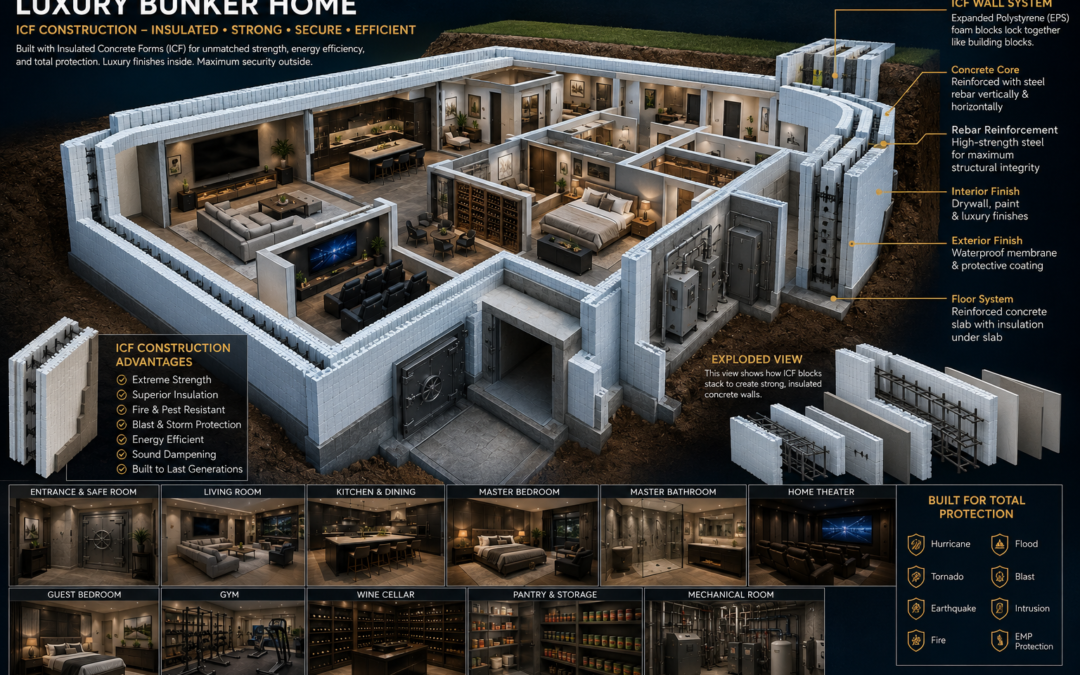
For decades, underground bunkers were associated primarily with military facilities, government installations, and emergency shelters designed for short-term survival. Today, however, a new category has emerged that is redefining the concept entirely: the luxury bunker, often referred to in popular media as a “billionaire bunker.” These sophisticated underground structures combine advanced engineering, security, self-sufficiency, and high-end amenities to create comfortable, long-term living environments capable of operating independently from the world above.
The rise of luxury bunkers has been driven by a growing interest in preparedness, resilience, and continuity planning among affluent families and business leaders. Concerns about severe weather, infrastructure disruptions, cybersecurity threats, geopolitical instability, and long-term emergency preparedness have encouraged some individuals to explore solutions that provide both security and independence. Rather than temporary shelters, modern luxury bunkers are often designed as fully functional underground residences that can support occupants comfortably for extended periods.
Unlike traditional storm shelters, today’s luxury underground structures often include amenities commonly found in upscale homes and resorts. Depending on the size and purpose of the project, features may include private bedroom suites, gourmet kitchens, fitness centers, entertainment rooms, home theaters, wine storage, medical areas, offices, workshops, and recreational spaces. Advanced lighting systems, carefully designed interiors, and high-end finishes help create environments that feel more like luxury residences than emergency facilities.
Modern bunker construction relies heavily on reinforced concrete engineering and advanced building methods such as Insulated Concrete Forms technology to create exceptionally durable structures. Thick concrete walls, waterproofing systems, structural reinforcement, and specialized engineering allow these facilities to withstand extreme weather conditions and provide long-term durability. Many underground structures also benefit from the natural thermal stability provided by the surrounding earth, improving energy efficiency and reducing heating and cooling demands.
One of the most important components of a luxury bunker is self-sufficiency. Many projects incorporate backup power generation, battery storage systems, water reserves, advanced air filtration, food storage areas, communications systems, and independent utility infrastructure. These systems are designed to allow the facility to continue operating during power outages or other disruptions while maintaining comfort and functionality for occupants.
Privacy and security are also major considerations in luxury bunker design. Access control systems, reinforced entry points, surveillance systems, and discreet locations are often integrated into the overall design strategy. Many owners view these projects not as reactions to fear, but as proactive investments in family security, business continuity, and long-term resilience.
The architectural design of underground living has evolved dramatically in recent years. Advances in engineering now allow for larger spaces, higher ceilings, improved lighting solutions, indoor courtyards, and sophisticated ventilation systems that create comfortable and inviting interiors. Some underground residences are designed to be nearly indistinguishable from luxury homes in terms of comfort, aesthetics, and functionality.
In places like Texas, interest in underground and hardened structures continues to grow due to severe weather risks, grid reliability concerns, and a strong culture of preparedness and self-reliance. Underground structures can serve multiple purposes, including storm protection, secure storage, private retreats, or emergency preparedness facilities, making them attractive to a broad range of property owners.
Ultimately, the luxury bunker trend represents a broader shift in how people think about resilience, preparedness, and long-term security. Rather than viewing underground structures solely as emergency shelters, many now see them as integrated components of modern resilient design—spaces that combine protection, comfort, technology, and independence into a single highly engineered environment.
As construction technology continues to evolve, luxury underground structures are likely to become increasingly sophisticated and more widely adopted by homeowners seeking the highest levels of protection and preparedness. Whether viewed as an investment in security, resilience, or peace of mind, the concept of the luxury bunker has moved firmly into the mainstream of high-performance construction and modern estate planning.